
 English
What is a mullion profile?
If you are interested in building architecture, you must have seen the types of windows up close. Whatever design and shape these windows have, they have a series of frames and columns around them. The task of these columns is to maintain the glass inside the frame and also to maintain the window frame against environmental adversities such as wind, impact and vibration. The material of this column is…
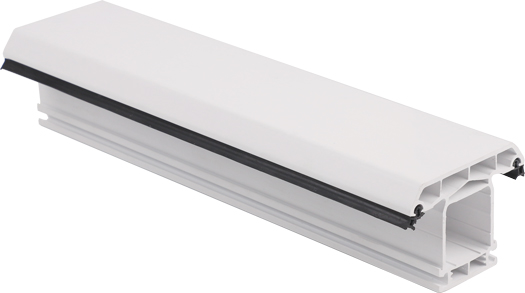
If you are interested in building architecture, you must have seen the types of windows up close. Whatever design and shape these windows have, they have a series of frames and columns around them. The task of these columns is to maintain the glass inside the frame and also to maintain the window frame against environmental adversities such as wind, impact and vibration. The material of these horizontal and vertical columns can be wooden, aluminum, iron or composite. These vertical and horizontal columns that hold the window are called mullion. In the following, we will explain what the mullion profile is and what its uses are in the construction industry. Stay with us.
What is the use of mullions in building construction?
In the construction and architecture industry, the vertical columns that separate the window frames and give them strength are called mullions. In some cases, the mullion may have only a decorative aspect and not be used much in the strength of the window.
In the word profile, it refers to the equipment and sections that are used in the construction of various construction equipment. Therefore, the accessories used in the construction of window mullions, skylights or building hatches are called mullion profiles. In the past, the material of these profiles was mostly wood and metal, but today, composite sheets such as UPVC are used in the manufacture of mullion profiles. Of course, the profile of the door and window is not limited to mullion and is also used in places like Muntins, which we will discuss further.
What is the difference between Mullions and Muntins?
If you pay attention to the historical monuments, you will notice the small glass frames used in the windows. In the past, it was difficult to make glass with a small thickness and a large area, that's why artisans produced glass in smaller dimensions and architects used sections to hold these pieces of glass together, which are called montains in today's terms.
Montinz actually separates the different sections of the glass and makes the window stronger against impact. Maybe this question will arise for you, what is the difference between Montains and mullion profile? In fact, the mullions were the main columns of the window that carried the main load of the frame and glass; But Montinz currently has more of a decorative and protective aspect for windows and gives a grid look to the glass of houses. At present, many architects, if using mountins, use it outside the main frame and as a protection for the glass. For this reason, the material of mounts is often metal.
What is the function of Mullion profile?
As mentioned, mullions are vertical columns supporting windows. The mullion profile is well placed around the window glass and actually connects the window and the frame to each other. The most important job of the mullion profile is to keep the window in place and cover the seams around it.
In the double-glazed door and window profile, two glasses are mounted on the mullion, and the mullion profile is responsible for maintaining these two glasses and insulating the space between them. Currently, this profile is mostly made of UPVC. All kinds of mullion profiles are now available to you dear ones on the Abayan door and window profile site.
What is the application of the mullion profile in the window?
The use of mullion profile is increasing day by day. In the past, mullion was used only for the strength and maintenance of the window, but nowadays mullion profiles are also very important in insulating and beautifying windows. But what is the reason for our emphasis on the use of mullion profile?
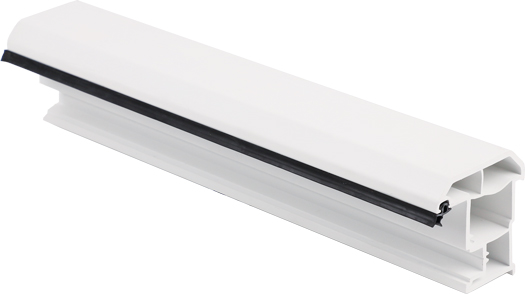
The new mullion profiles are made of composite material and by providing a multi-layered cross-section around the window, in addition to securing the glass in place, they also cover the opening area well. For this reason, when buying UPVC door and window profiles, you must pay attention to the elegance used in its mullion profile. If you want to buy UPVC door and window profile, or you are confused about preparing mullion profile, be sure to get help from Abayan consulting team.
Types of mullion profiles
The cross-section of the mullion profile is shaped like the English letter (T) and as we said, it can cover the window space in both horizontal and vertical parts. For example, the mullion profile can be used for the inscription above the double-glazed window and UPVC. Now that we understand what the mullion profile is, we can look at the different types of this widely used structure. Mullion profiles available in the market can be generally classified into four categories, these four categories are:
Series 60 fixed mullion profile
This profile can be used along with the set of 6 cm profiles.
Series 70 fixed mullion profile
This fixed mullion profile has a width equal to 70 mm or 7 cm and naturally it should be used along with other 7 cm profiles.
Movable mullion profile
The movable mullion profile is connected to the window opening hinge and moves with it when the window is opened. This type of mullion profile can be used in French or simple double-glazed doors and windows. In this type of window, both side sashes can be opened side by side.
Sliding inscription mullion
Sliding profiles are different from other profiles in general, and for this reason, this type of mullion has little resemblance to other types of mullion profile. In fact, this mullion profile can be used as a horizontal divider inside sliding windows.
We hope that by reading this article, you have gained the knowledge of what the mullion profile is, what it is used for, and you have become familiar with its types.


Your comment
Share your experience or question. Comments are published after approval.