
 English
What are UPVC panel profiles? An introduction to the different types
Bathroom and toilet doors are always exposed to moisture and steam. Therefore, it is necessary to use doors for these places that are suitable for wet environments. Usually, a type of profile called panel is used instead of glass in UPVC doors. The UPVC panel profile, like other profiles, has holes that insulate the place...
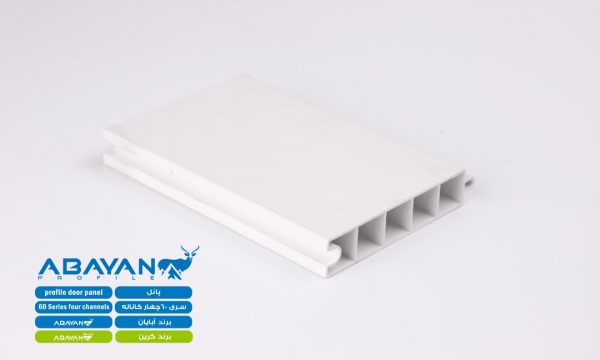
Bathroom and toilet doors are always exposed to moisture and steam. Therefore, it is necessary to use doors for these places that are suitable for wet environments. Usually from a type of profile called panel instead of glass in UPVC doors is used Panel profile upvc Like other profiles, it has holes that insulate the desired places. In addition to service doors, panels are also used as door and window profiles.
Another type of UPVC panel profile There are those that have recently entered the market And it is known as decorative panel. These panels are ready for decoration and with pressed glass, which are suitable for use in the entrance door, service, bathroom and master.
In this article, we are going to explain to you what the UPVC panel profile is, and also introduce you to the advantages and price of the UPVC panel profile.
Advantages of UPVC panel profile
First, we will examine the advantages of UPVC panels and then we will go to their technical specifications. Among the advantages of the door and window profile that increase the value of its use, the following can be mentioned.
- The UPVC panel profile can be easily installed and placed.
- Due to its light weight, the panel does not cause problems for the profile in terms of tilting and swaying.
- The UPVC profile of the panel can be easily washed.
- It does not rust and has a very high resistance to moisture and corrosion.
- It can be used on all doors, such as bedroom or bathroom doors.
- It can be easily replaced.
- Insulation is heat, sound and electricity.
- It has a variety of colors and good elegance and beauty.
- It is non-flammable.
- It has very high security.
- It allows you to install nets and guards.
- It can be recycled, which is very important for preserving the environment.
- It prevents the entry of rainwater and dust
- It is suitable for any type of weather.
- It is very affordable.
Technical specifications of the UPVC panel profile
The density of the UPVC panel profile is 1380 kg/m and the deformation temperature is 83 degrees Celsius. These panels are between 30 and 40 dB of sound insulation, and the maximum temperature in which these panels can be used is about 60 degrees Celsius. Also, the UPVC panel profile has a tensile stress of about N55 mm and has a melting point equal to 90 degrees Celsius.
All panels are 1.90x80 cm in size and are cut and measured according to the customer's needs. The standard diameter of the panels is 20 mils, which can be placed in all profiles with this diameter. The panels have 3 layers, i.e. two outer PVC layers and one inner layer.
The price of the UPVC panel profile
Many factors are involved in calculating the price of an UPVC window, and for this reason, it is a bit difficult to calculate its price. Factors such as size, material used, glass, etc., have a direct impact on the pricing of UPVC panels and windows. In the following, we describe some of the factors affecting the price of UPVC windows. You can also visit the Abayan profile blog to learn more about Abayan door and window profiles and their prices.
Window model
The window model you are considering has a great impact on the final price for you. For example, each type of hinged or sliding window requires its own panel, which will be effective in determining its price.
Window dimensions
Naturally, the bigger the window you choose, the more expensive it will be. Also keep in mind that the price of a fixed window is cheaper than a pop-up window.
Glass is used
Most people buy double-glazed door and window profiles, which are suitable for most areas; Unless your place of residence is in cold places and you need a triple window. Also, other types of glass such as tempered glass and laminate can be used, which in addition to the higher price, will also be more secure.
The type of profile or the material of the window frame
The type of profile used in the construction of the window or the material of the window frame is effective in its final price. Abayan door and window profile by providing different types of profiles in the market, product variety and also suitable price range for its customers.
The best type of UPVC panel profile
PUPVC profile It has been produced and used in Europe since the 60s. This profile has two important and main standards: English standard (BS EN 12608) and German standard (RAL GZ 716-1)! In both mentioned standards, class one or type A profiles have main walls with a thickness of more than 2.8 mm and side walls with a thickness of more than 2.6 mm.
Also, in B-type profiles, the main walls have a thickness higher than 2.5 and the side walls have a thickness higher than 2 mm. If the thickness of the walls is something outside the mentioned dimensions and determined according to the manufacturer's criteria, they are placed in class C. To determine the best type of profile, there are other standards that must be considered. In the following, we will examine these standards.
MUPVC primary wad used in the preparation of panels should be measured and examined. It is obvious that better material increases the quality and standard of the panel.
Appearance conditions: the more quality the appearance and beauty of a window and its design, the closer the window is to the standard.
Impact resistance of the profile panel: Another criteria that must be considered to determine the standard of a panel is its impact resistance. This case refers to the material used in making the profile and its production steps, how close it was to the standard limits.
Heat resistance: the UPVC panel profile must be tested against heat and withstand the specified temperature limit without damage so that it can be included as one of the best types of panels.
Summary

Your comment
Share your experience or question. Comments are published after approval.